
The health.tech global summit 2026 in Basel, Switzerland, was the place where AI met humanity. The event was created to gather senior decision-makers across health systems, pharma, startups, the public sector, and academia. But, thankfully, it was more than that. The demographic was incredibly varied, with 5,000 attendees from across the globe that challenged the “old men in suits” club… including young founders and aspiring entrepreneurs, clinicians in sneakers, and a surge of female leadership (even someone attending with their baby!).
The vast open-space of Messe Basel was filled with passionate speakers, expert panels, company booths, investors and incubators, and plenty of health startups seeking investment. All with the aim of translating insights into actions that can improve human health. There was some AI hype, but above all, a common wish to integrate AI and technology into health and patient care, seeking to navigate change management and make implementations smooth rather than simply promoting adoption.
While each attendee’s experience was probably different depending on the sessions they attended and the interactions they had, there are specific themes, and presentations that I found impactful and worth highlighting.
The main stage: resilience, truth, and justice
The main stage hosted some well-known keynote speakers, world-shapers who grounded the digital era into human reality across multiple high-impact sessions. Three of the high-profile talks included:
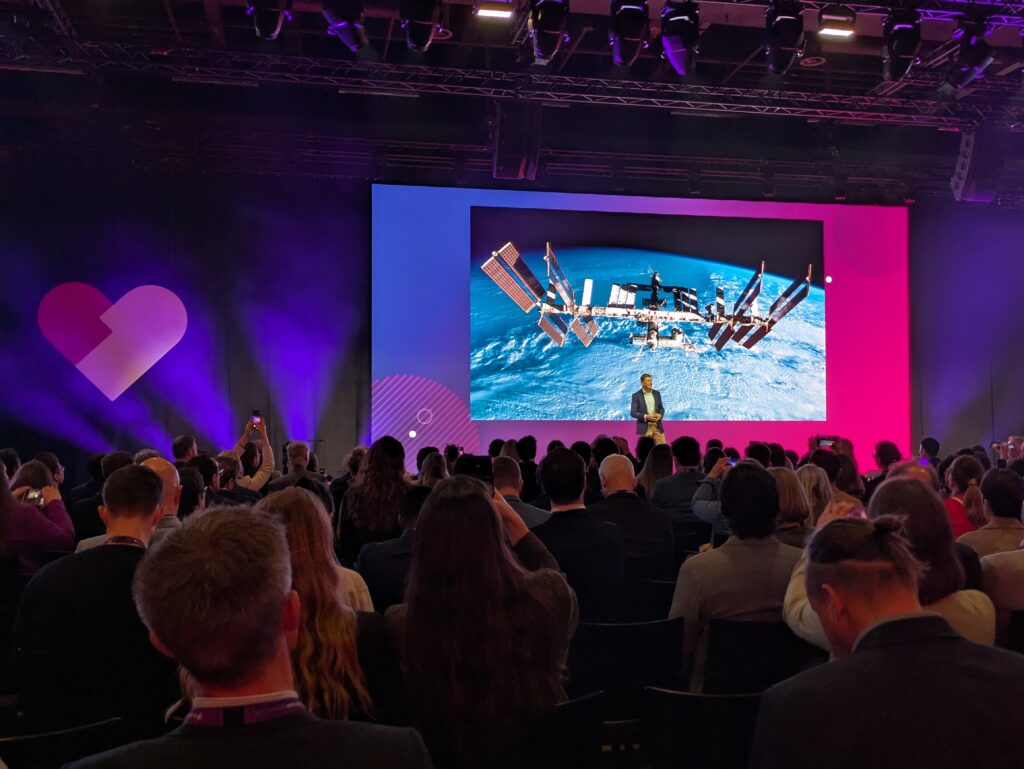
- Tim Peake – the space perspective: British astronaut Peake captivated the room with his brilliant stories on life in space and everything around it. The tough preparation he endured ahead of the mission covered anecdotes from his medical training to the human behaviour experiments the team endured to “prepare to fail”. I was surprised to learn that being in space is like aging for 20 years… yet changes are reverted after 2-6 months back on planet earth. Among the many stories he shared (how they trained core muscles in space, how they used nappies to absorb water in space suits, or how they’ve managed to 3D print a meniscus in space), the focus on the importance of effective communication and how studies in space help life and health on earth were key takeaways for many in the audience.
- Anthony Fauci – the anchor of truth: Dr. Anthony Fauci reminded us to “stick with the science” and truth. In an era where a new pandemic can quickly start, similarly to geopolitical uncertainty, his advice to “expect the unexpected” served as a staunch defense of evidence-led progress. He was clear: Science should drive policy, not the other way around, and governments play key roles in public health (echoed by talks from other policymakers, such as Finland, during the event).
- Amal Clooney – AI for good: Clooney shifted the lens to the ethical horizon, framing the future of tech in health (and law) as a human rights issue. She argued that “AI for good” must ensure breakthroughs reach the most vulnerable, democratizing health rather than deepening the global divide.
Content themes: Agentify, BASI, and Symptom Radars
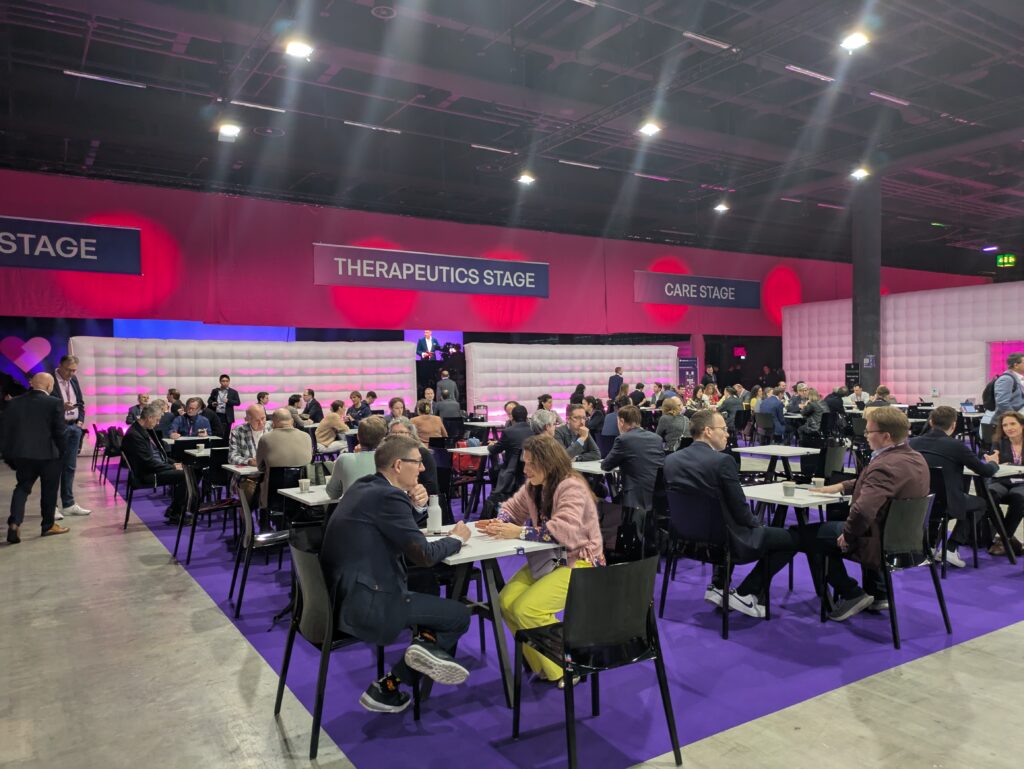
The summit was a logistical feat of parallel intelligence, featuring four content tracks (Next generation therapeutic development, Preventive & personal health, Modernising mechanics of care, and AI in healthcare) running across the Therapeutics, Horizon, Care, and Insights stages, as well as workshops and masterclasses. Will I summarise all the talks I attended and conversations that I had? Not really! I’ll just mention three concepts that stuck with me:
- ‘Agentify’ is used as a verb to describe AI agents as trusted copilots capable of navigating complex therapeutic pathways.
- Biology Artificial Super Intelligence (BASI) and closed-loop drug discovery mean using AI to autonomously design, test, and refine treatments in a continuous cycle.
- New technology and startups are really unlocking health in many ways, including used as a symptom radar to detect for instance heart issues using language-agnostic voice ‘biomarkers’ long before physical symptoms manifest.
Other standouts included using blastoids to mimic human blastocysts to test new molecules to improve IVF success rates, or the 3D image-guided laser treatment developed by PulseMedica, who won the health.tech Startup Award of this year’s event.
Most technology is aimed at making human expertise more efficient and accessible, but technology could also be better than humans. The main hurdles rely on trust, adjusting regulatory paths, and change management when implementing intelligent models into existing healthcare environments (great talk from Hospital Clínic in Barcelona on that!).
Women’s health: present, but still a work in progress
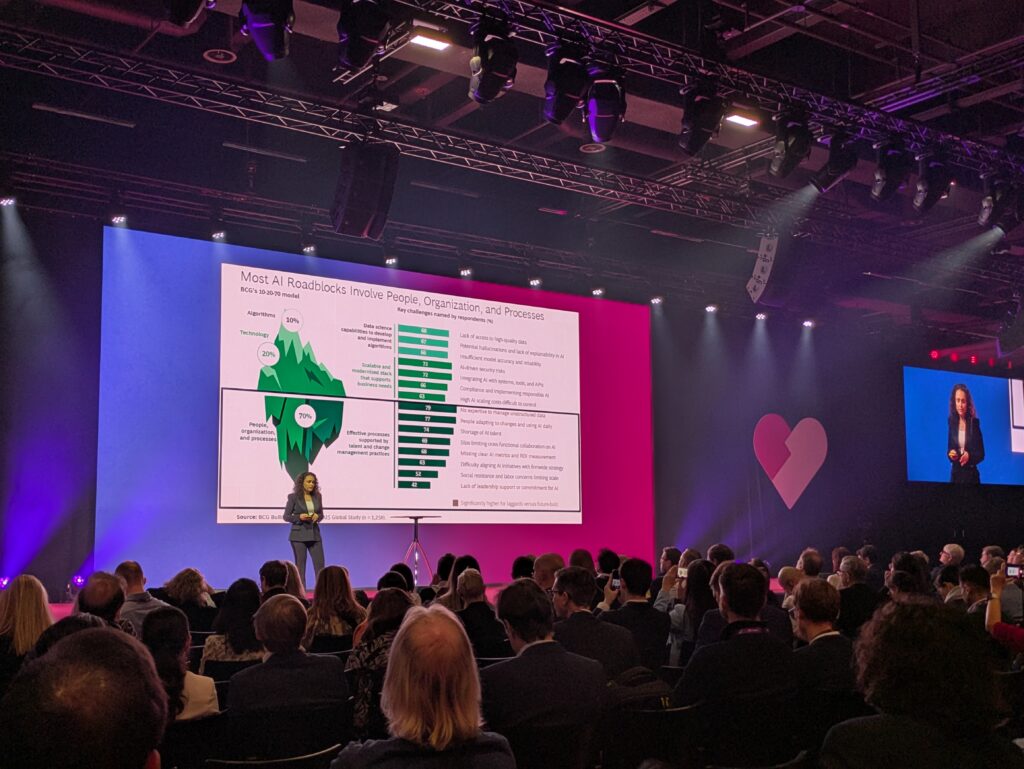
Women’s health (FemTech) had a significant, albeit growing, footprint this year. While there’s still work to do in closing the investment gap (let’s remember that women control 80% of consumer healthcare decisions), most sessions were well attended and inspiring.
- The Oura effect: Oura’s CEO Tom Hale delivered a fascinating talk on their new proprietary LLM designed specifically for women’s health guidance, moving toward more tailored, longitudinal monitoring.
- Scanvio (Startup award finalist): The room was buzzing after the session with Scanvio, who uses AI to identify the subtle patterns of endometriosis in routine scans, a game-changer for a condition that typically takes seven years to diagnose.
- The frontiers of fertility and breastfeeding: We saw incredible pitches from founders developing blastocyst-like structures to improve IVF success rates and the Irish startup Coroflo, which has developed a world-first, award-winning sensor for breastfeeding (measuring real-time milk microflow and finally providing mothers with the accurate data they’ve been denied for decades).
Networking at scale
The health.tech app acted as the event’s heartbeat, facilitating thousands of meetings and proving that networking is the real engine of innovation. Even though the booths were quite plain (I saw fewer cool freebies than your typical life sciences conference!), the quality of the conversations more than made up for it. Much of this human connection was anchored by one of the event’s main stage host and communication coach, Shannon Jenkins, whose brilliant talk inspired everyone to use storytelling strategically to make their presentations easy to understand and highly engaging.
Overall, Basel 2026 proved that when we combine the rigor of science with the agility of tech, the results are life-saving. Hopefully, decision-makers and future leaders walked away with a clear roadmap for establishing more proactive, human-centered healthcare systems… and founders whom I talked to got inspired by the power of storytelling to market their products and secure investment.
Do you need help building your content strategy?
Check our Marketing & Comms Strategy service or